Stowaways: An Overlooked Risk with Serious Chartering Consequences
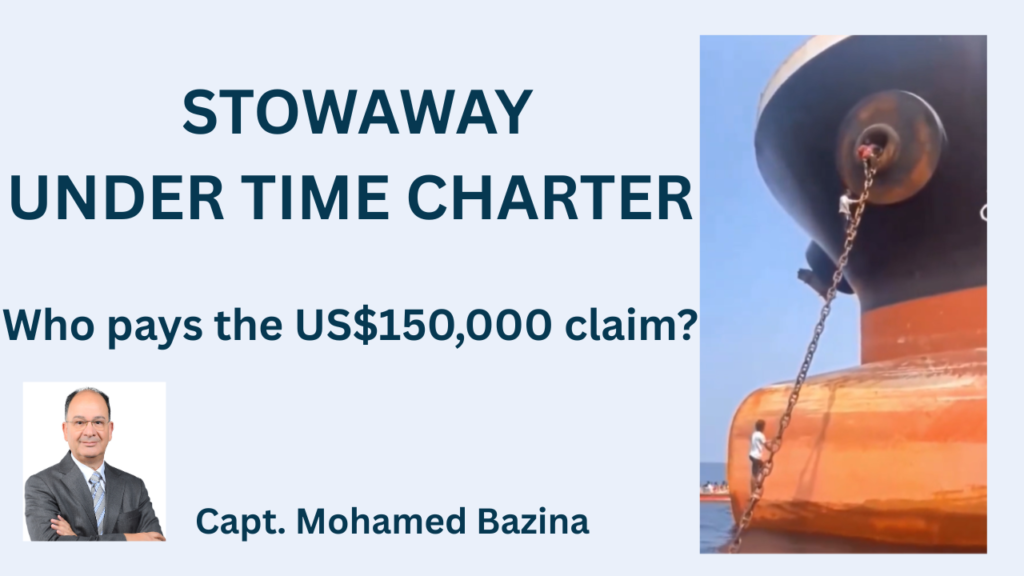
Stowaways are often treated as a purely operational issue. In reality, they create significant commercial, legal, and time charter exposure for shipowners, charterers, and shipbrokers alike.
Across many fixtures, the real impact of stowaways only becomes visible after sailing, when responsibilities are no longer clearly defined and disputes begin to surface.
Why Stowaways Matter in Chartering
The presence of stowaways can trigger a chain of complications, including:
Voyage delays and deviation costs
Port fines and immigration penalties
Off-hire disputes under time charters
Repatriation and security costs
Increased involvement from P&I Clubs
These are not theoretical risks — they directly affect voyage profitability, contractual performance, and commercial relationships.
Where Disputes Typically Arise
In practice, disputes usually emerge due to:
Unclear allocation of responsibility between Owners and Charterers
Poorly drafted or incomplete charter party clauses
Misunderstanding of off-hire implications
Lack of procedural clarity in handling stowaways onboard
Failure to anticipate risks at the fixture stage
What begins as a security issue can quickly escalate into a multi-party commercial dispute.
The Importance of Clause Drafting and Risk Allocation
One of the most common root causes of stowaway-related disputes is weak contractual protection.
Without clear clauses addressing:
Responsibility for prevention
Allocation of costs
Deviation rights
Off-hire implications
…parties are left exposed to interpretation, leading to delays, claims, and disagreements.
For shipbrokers in particular, understanding these risks at the negotiation stage is critical. Once the vessel sails, the opportunity to properly allocate risk is already lost.
Video Insight: Understanding Stowaway Risks in Practice
For a practical breakdown of how stowaway issues develop and how they impact chartering contracts, watch the video below:
Final Thought
Understanding stowaway risk is not about theory — it is about:
Protecting fixtures
Managing expectations between parties
Reducing disputes across the chartering chain
In today’s market, where margins are tight and claims are frequent, overlooking this risk can be costly and avoidable.